
Product Description
High Precision Low Backlash 1500W Servo Motor Planetary Gearboxes (PXR90-L2)
Planetary reducer is widely used, mainly in the field of textile machinery, spring machine, printing equipment, etc
There are also many brands of servo motors, mainly including Panasonnic,Fuji,Mitsubishi, etc
Product Description
1.Spiral bevel gear reversing mechanism to realize right angle steering output;
2.The installation distance of spiral bevel gear pair is adjustable and the working sound is lower;
3.Grinding bevel gear can be selected,and the working sound is more stable and quiet;
4.Integrated structure,high precision,high rigidity;
5.Double support case planet carrier structure,high reliable,suitable for high-speed frequent and reverse rotation;
6.With axial clearance adjustment function;
7.Collet type locking design,higher coaxiality of motor installtion;
8.Helical gear transmission ,low backlash,more accurate positioning;
9.Size range:60-120mm;
10.Ratio range:3-100;
11.Precision range:3-5arcmin (P1);5-8arcmin (P2)
Product Parameters
| Specifications | PXR42 | PXR60 | PXR90 | PXR120 | |||
| Technal Parameters | |||||||
| Max. Torque | Nm | 1.5times rated torque | |||||
| Emergency Stop Torque | Nm | 2.5times rated torque | |||||
| Max. Radial Load | N | 780 | 1530 | 3300 | 6700 | ||
| Max. Axial Load | N | 390 | 600 | 1500 | 3000 | ||
| Torsional Rigidity | Nm/arcmin | 2.5 | 6 | 12 | 23 | ||
| Max.Input Speed | rpm | 8000 | 8000 | 6000 | 6000 | ||
| Rated Input Speed | rpm | 4000 | 4000 | 3000 | 3000 | ||
| Noise | dB | ≤56 | ≤64 | ≤66 | ≤66 | ||
| Average Life Time | h | 20000 | |||||
| Efficiency Of Full Load | % | L1≥95% L2≥90% | |||||
| Return Backlash | P1 | L1 | arcmin | ≤3 | ≤5 | ≤5 | ≤5 |
| L2 | arcmin | ≤5 | ≤7 | ≤7 | ≤7 | ||
| P2 | L1 | arcmin | ≤5 | ≤8 | ≤8 | ≤8 | |
| L2 | arcmin | ≤7 | ≤10 | ≤10 | ≤10 | ||
| Moment Of Inertia Table | L1 | 3 | Kg*cm2 | / | 0.4 | 2.28 | 6.87 |
| 4 | Kg*cm2 | 0.12 | 0.4 | 2.28 | 6.87 | ||
| 5 | Kg*cm2 | 0.09 | 0.4 | 2.28 | 6.87 | ||
| 7 | Kg*cm2 | 0.09 | 0.4 | 2.28 | 6.87 | ||
| 8 | Kg*cm2 | / | 0.4 | 1.45 | 4.76 | ||
| 10 | Kg*cm2 | 0.09 | 0.3 | 1.45 | 4.76 | ||
| 14 | Kg*cm2 | / | 0.4 | 2.28 | 6.87 | ||
| 20 | Kg*cm2 | / | 0.4 | 2.28 | 6.87 | ||
| L2 | 25 | Kg*cm2 | 0.09 | 0.4 | 2.28 | 6.87 | |
| 30 | Kg*cm2 | / | 0.4 | 2.28 | 6.87 | ||
| 35 | Kg*cm2 | 0.09 | 0.4 | 2.28 | 6.87 | ||
| 40 | Kg*cm2 | 0.09 | 0.4 | 2.28 | 6.87 | ||
| 50 | Kg*cm2 | 0.09 | 0.3 | 1.45 | 4.76 | ||
| 70 | Kg*cm2 | 0.09 | 0.3 | 1.45 | 4.76 | ||
| 100 | Kg*cm2 | 0.07 | 0.3 | 1.45 | 4.76 | ||
| Technical Parameter | Level | Ratio | PXR42 | PXR60 | PXR90 | PXR120 | |
| Rated Torque | L1 | 3 | Nm | / | 40 | 105 | 165 |
| 4 | Nm | 17 | 45 | 130 | 230 | ||
| 5 | Nm | 15 | 45 | 130 | 230 | ||
| 7 | Nm | 12 | 45 | 100 | 220 | ||
| 8 | Nm | / | 45 | 90 | 200 | ||
| 10 | Nm | 10 | 45 | 130 | 230 | ||
| 14 | Nm | / | 45 | 100 | 220 | ||
| 20 | Nm | / | 30 | 75 | 175 | ||
| L2 | 25 | Nm | 15 | 45 | 130 | 230 | |
| 30 | Nm | / | 40 | 105 | 165 | ||
| 35 | Nm | 15 | 45 | 130 | 230 | ||
| 40 | Nm | 17 | 45 | 130 | 230 | ||
| 50 | Nm | 15 | 45 | 130 | 230 | ||
| 70 | Nm | 12 | 45 | 130 | 230 | ||
| 100 | Nm | 15 | 46 | 130 | 230 | ||
| Degree Of Protection | IP65 | ||||||
| Operation Temprature | ºC | – 10ºC to -90ºC | |||||
| Weight | L1 | kg | 0.7 | 2.05 | 6.45 | 13.7 | |
| L2 | kg | 0.9 | 3.15 | 8.8 | 17.2 | ||
Company Profile
Packaging & Shipping
1. Lead time: 10-15 days as usual, 30 days in busy season, it will be based on the detailed order quantity;
2. Delivery: DHL/ UPS/ FEDEX/ EMS/ TNT
/* January 22, 2571 19:08:37 */!function(){function s(e,r){var a,o={};try{e&&e.split(“,”).forEach(function(e,t){e&&(a=e.match(/(.*?):(.*)$/))&&1
| Application: | Motor, Motorcycle, Machinery, Marine, Agricultural Machinery, Textile Machinery |
|---|---|
| Function: | Change Drive Torque, Change Drive Direction, Speed Changing, Speed Reduction |
| Layout: | Coaxial |
| Hardness: | Hardened Tooth Surface |
| Installation: | Vertical Type |
| Step: | Double-Step |
| Samples: |
US$ 369/Piece
1 Piece(Min.Order) | |
|---|
| Customization: |
Available
| Customized Request |
|---|
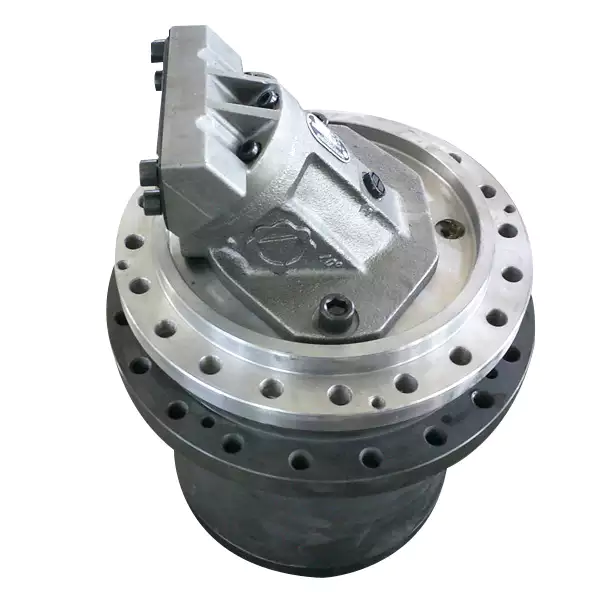
Concept of Coaxial and Parallel Shaft Arrangements in Planetary Gearboxes
Coaxial and parallel shaft arrangements refer to the orientation of the input and output shafts in a planetary gearbox:
- Coaxial Shaft Arrangement: In this arrangement, the input and output shafts are aligned along the same axis, with one shaft passing through the center of the other. This design results in a compact and space-efficient gearbox, making it suitable for applications with limited space. Coaxial planetary gearboxes are commonly used in scenarios where the gearbox needs to be integrated into a compact housing or enclosure.
- Parallel Shaft Arrangement: In a parallel shaft arrangement, the input and output shafts are positioned parallel to each other but not on the same axis. Instead, they are offset from each other. This configuration allows for greater flexibility in designing the layout of the gearbox and the surrounding machinery. Parallel shaft planetary gearboxes are often used in applications where the spatial arrangement requires the input and output shafts to be positioned in different locations.
The choice between a coaxial and parallel shaft arrangement depends on factors such as available space, mechanical requirements, and the desired layout of the overall system. Coaxial arrangements are advantageous when space is limited, while parallel arrangements offer more design flexibility for accommodating various spatial constraints.
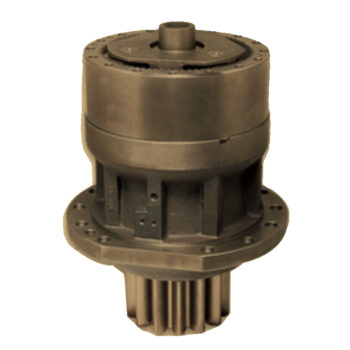
Advantages of Backlash Reduction Mechanisms in Planetary Gearboxes
Backlash reduction mechanisms in planetary gearboxes offer several advantages that contribute to improved performance and precision:
Improved Positioning Accuracy: Backlash, or the play between gear teeth, can lead to positioning errors in applications where precise movement is crucial. Reduction mechanisms help minimize or eliminate this play, resulting in more accurate positioning.
Better Reversal Characteristics: Backlash can cause a delay in reversing the direction of motion. With reduction mechanisms, the reversal is smoother and more immediate, making them suitable for applications requiring quick changes in direction.
Enhanced Efficiency: Backlash can lead to energy losses and reduced efficiency due to the impacts between gear teeth. Reduction mechanisms minimize these impacts, improving overall power transmission efficiency.
Reduced Noise and Vibration: Backlash can contribute to noise and vibration in gearboxes, affecting both the equipment and the surrounding environment. By reducing backlash, the noise and vibration levels are significantly decreased.
Better Wear Protection: Backlash can accelerate wear on gear teeth, leading to premature gearbox failure. Reduction mechanisms help distribute the load more evenly across the teeth, extending the lifespan of the gearbox.
Enhanced System Stability: In applications where stability is crucial, such as robotics and automation, backlash reduction mechanisms contribute to smoother operation and reduced oscillations.
Compatibility with Precision Applications: Industries such as aerospace, medical equipment, and optics require high precision. Backlash reduction mechanisms make planetary gearboxes suitable for these applications by ensuring accurate and reliable motion.
Increased Control and Performance: In applications where control is critical, such as CNC machines and robotics, reduction mechanisms provide better control over the motion and enable finer adjustments.
Minimized Error Accumulation: In systems with multiple gear stages, backlash can accumulate, leading to larger positioning errors. Reduction mechanisms help minimize this error accumulation, maintaining accuracy throughout the system.
Overall, incorporating backlash reduction mechanisms in planetary gearboxes leads to improved accuracy, efficiency, reliability, and performance, making them essential components in precision-driven industries.
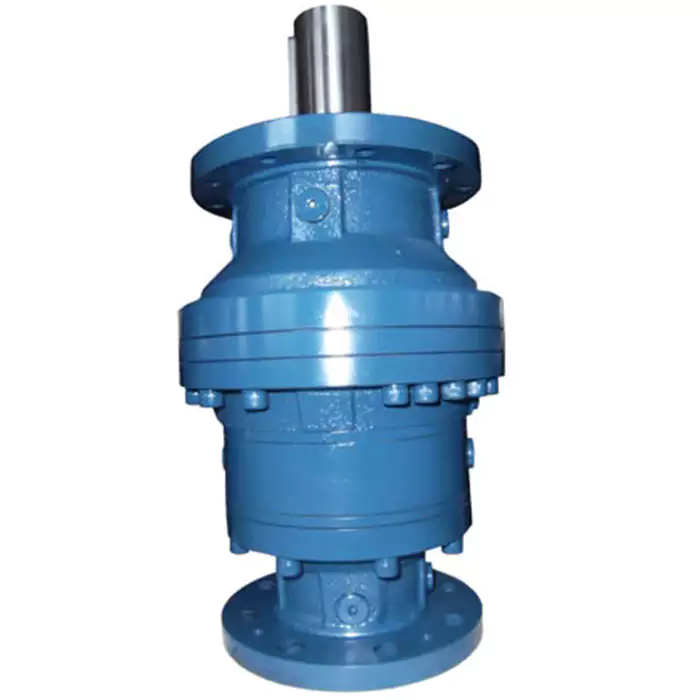
Impact of Gear Ratio on Output Speed and Torque in Planetary Gearboxes
The gear ratio of a planetary gearbox has a significant effect on both the output speed and torque of the system. The gear ratio is defined as the ratio of the number of teeth on the driven gear (output) to the number of teeth on the driving gear (input).
1. Output Speed: The gear ratio determines the relationship between the input and output speeds of the gearbox. A higher gear ratio (more teeth on the output gear) results in a lower output speed compared to the input speed. Conversely, a lower gear ratio (fewer teeth on the output gear) leads to a higher output speed relative to the input speed.
2. Output Torque: The gear ratio also affects the output torque of the gearbox. An increase in gear ratio amplifies the torque delivered at the output, making it higher than the input torque. Conversely, a decrease in gear ratio reduces the output torque relative to the input torque.
The relationship between gear ratio, output speed, and output torque is inversely proportional. This means that as the gear ratio increases and output speed decreases, the output torque proportionally increases. Conversely, as the gear ratio decreases and output speed increases, the output torque proportionally decreases.
It’s important to note that the gear ratio selection in a planetary gearbox involves trade-offs between output speed and torque. Engineers choose a gear ratio that aligns with the specific application’s requirements, considering factors such as desired speed, torque, and efficiency.


editor by CX 2024-05-02