
Differences in definition and basic structure
Planetary gearboxes, as the core components of mechanical transmission systems, can be classified into two types based on their structural forms: “single-stage” and “multi-stage”. The commonly mentioned “single-stage planetary gearbox” belongs to a single-stage structure. As a general term, “planetary gearbox” can refer to both single-stage structures and multi-stage systems. From the application perspective, the main differences between the two are reflected in aspects such as structural complexity, transmission efficiency, and applicable scenarios.
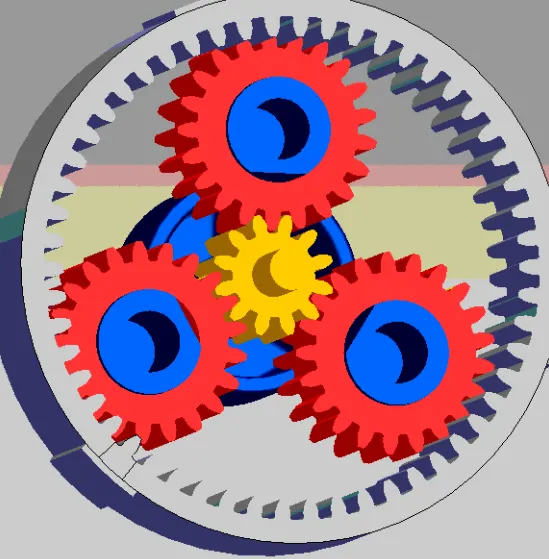
Characteristics of single-stage planetary gearboxes
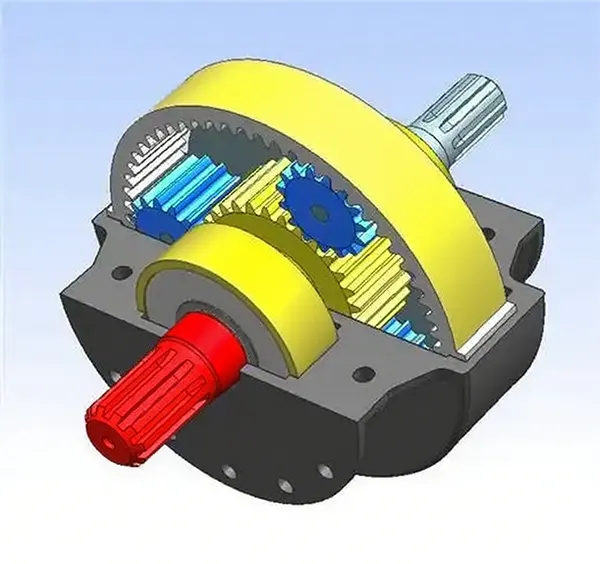
A single-stage planetary gearbox contains only one set of planetary gear train, which is composed of the sun gear, planetary gears and gear rings to form a single path for power transmission. Its structure is compact and it occupies a small space, making it especially suitable for scenarios with high requirements for installation dimensions, such as electric window regulators and household blenders. The actual measurement data of a certain brand of power tools shows that under the operating condition of 2000 revolutions per minute, the transmission efficiency of this structure can reach 93%, but the maximum transmission ratio generally does not exceed 10:1.
Advantages of multi-stage planetary gearboxes
Multi-stage planetary gearboxes achieve stepwise speed increase or decrease by connecting multiple sets of planetary gear trains in series, thereby obtaining a higher transmission ratio and stronger load capacity. Taking the joint drive system of a certain industrial robot as an example, the three-stage planetary gearbox it uses can increase the single-stage torque transmission to 3.6 times the original under the same volume, and the maximum transmission ratio can reach 1000:1. This structural design has extremely high requirements for the module matching accuracy of gears at each stage. The axial length of a certain model of three-stage gearbox is approximately 40% longer than that of a single-stage one, while the overall load-bearing capacity is increased by five times.
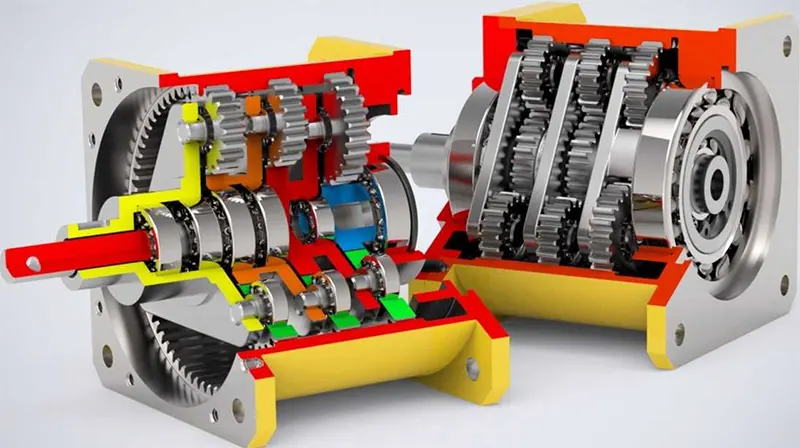
Differentiated design of material configuration
Single-stage gearboxes can mostly meet the daily strength requirements by using 20CrMnTi carburized steel. In multi-level structures, as the loads borne by each level are different, materials need to be selected specifically. For instance, a certain wind turbine gearbox manufacturer pointed out that the first stage of its three-stage planetary gearbox uses 18CrNiMo7-6 alloy steel, while the third stage employs 42CrMo4V steel with higher strength. This strategy of graded material usage helps to control the overall weight while ensuring strength.
Comparison of maintenance costs and efficiency
The maintenance of single-stage gearboxes is relatively simple. On average, it only takes about 2 hours to replace the gear assembly, and the repair cost is approximately between $110 and $210. In contrast, the three-stage gearbox, due to its more complex structure, needs to be disassembled and assembled in conjunction with a dedicated centering fixture. In a maintenance case of the vertical mill reducer in a certain cement plant, the process took up to 72 hours, and the labor cost alone exceeded $4,200.
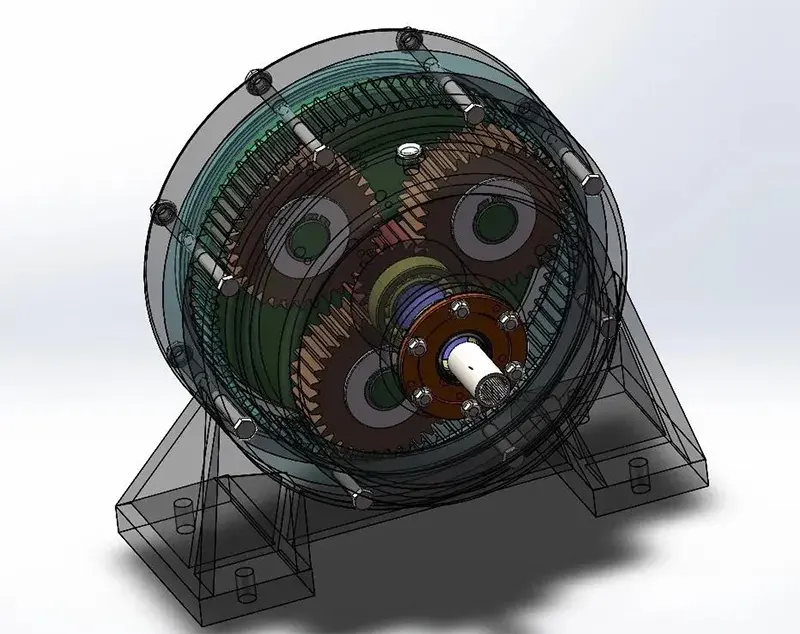
Vibration and noise control capability
The single-stage gear structure, with fewer meshing points, has excellent noise control performance. Experimental data shows that the noise during no-load operation is only about 65 decibels. However, in multi-stage systems, due to the large number of meshing stages, a floating gear ring structure is needed to eliminate cumulative errors. A certain precision machine tool adopts a three-stage gearbox and combines phase tuning technology to control the vibration amplitude within 5 microns, but the manufacturing cost increases by approximately 25% accordingly.
Modular design and flexibility
The adjustment space for single-stage structures is relatively limited, and deformation is mainly achieved by changing the number of teeth or the module. In comparison, multi-level system design is more flexible. For instance, the reducer of a certain shield machine adopts a 2K-H type three-stage planetary structure. By adjusting the transmission ratio of the intermediate stage, the output torque can flexibly vary between 120 and 360kN·m, enhancing the product’s adaptability by up to 60%.
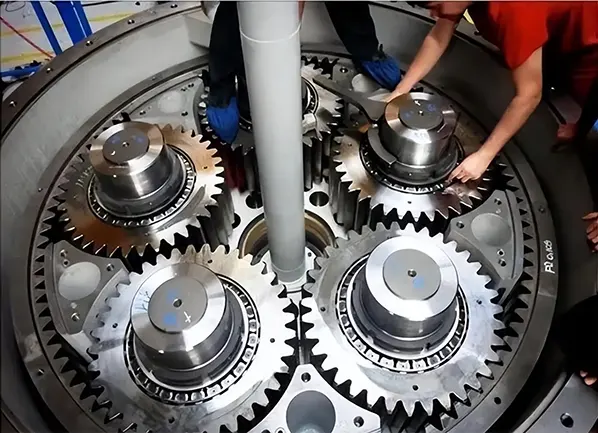
Comparison of heat dissipation capacity
Most single-stage gearboxes rely on natural convection for heat dissipation, and the temperature rise is usually controlled within 40℃. Due to the increased power consumption and heat generation in multi-stage structures, a forced lubrication system needs to be introduced. The three-stage gearbox of a certain Marine thruster is equipped with an oil injection cooling device. The oil flow rate needs to reach 8 liters per minute to keep the working temperature below 75℃, which also increases the overall energy consumption by 12%.
Balance between manufacturing costs and benefits
The cost structure of a single-stage structure in terms of materials and processing is relatively stable, with materials accounting for approximately 55% and processing costs making up 30%. The assembly and commissioning costs of multi-stage gearboxes can account for as high as 45%, and for each increase in IT grade precision, the overall manufacturing cost will rise by 18%. Therefore, starting from the fifth level, the marginal benefits of the multi-level structure show a significant decline.
The technical difficulty of fault diagnosis
The vibration spectrum of a single-stage structure is clear, and the fault characteristic frequencies are easy to identify. In contrast, due to the interference of modulated signals, the analysis complexity of multi-stage gearboxes is significantly increased. For instance, data from a certain wind farm shows that to determine the fault of the sun gear in a three-stage gearbox, it is necessary to analyze the sideband components at three times the meshing frequency, which increases the algorithmic complexity of the condition monitoring system by more than twice.
Axial force balancing strategy
The single-stage structure relies on the equidistant arrangement of planetary gears to achieve natural balance. The measured axial residual force of a certain model is less than 5N. However, a multi-level system requires the design of a dedicated compensation mechanism. For instance, the three-stage planetary gearbox used in the main reducer of a certain helicopter is equipped with a hydraulic balance piston, which can dynamically counteract axial forces up to 3000N. This system accounts for 8% of the entire aircraft’s weight.
Verification process and test cycle
The verification process for single-stage gearboxes is relatively simplified, and usually a 200-hour durability test is sufficient. The third-level structure needs to complete 2,000 hours of bench tests, including over 30 sub-items such as thermal shock and load sudden change tests. The verification cycle is ten times that of a single-level structure, and the failure rate can be reduced to three per ten thousand.
Installation and commissioning accuracy requirements
The allowable shaft deviation of a single-stage gearbox is controlled within 0.1mm, and it can be installed by a general technician with a qualification rate of up to 98%. The three-level system has a higher requirement for coaxiality (<0.02mm), and a laser alignment instrument is needed to assist in operation. The training records of a certain enterprise show that workers need to receive at least 500 hours of specialized training to independently complete the assembly.
Application suggestions and selection logic
Overall, if the required transmission ratio is less than 10, the installation space is limited and the budget is tight, a single-stage planetary gearbox is a more cost-effective choice. If the transmission ratio is greater than 100, the load-bearing capacity requirement is high, and the user can accept a relatively high maintenance cost, then the multi-stage structure is irreplaceable. The construction machinery enterprise suggests that when the required output torque exceeds 2000Nm, priority should be given to the three-stage or higher planetary gearbox solution.