
In the field of industrial automation, the servo system is the core equipment for precise control, and the planetary gearbox, as the “power heart” of the servo system, its selection directly affects the system performance and stability. This article will break down for you how to match the best planetary gearbox for a servo system from technical principles, selection rules to practical application scenarios.
Why do servo systems prefer planetary Gearboxes?
Planetary gearboxes, with their unique structural advantages, have become the preferred transmission solution for servo systems:
High rigidity and low clearance: The planetary gear design achieves high rigidity through multi-tooth meshing, with clearance controllable within 1-2 arc minutes, ensuring the positioning accuracy of the system.
Compact and efficient: The single-stage reduction ratio covers 3:1 to 10:1, and the three-stage series connection can reach 1000:1. Its volume is only 1/3 of that of a common gearbox.
Outstanding dynamic response: The helical gear design increases the contact ratio by 30%, reduces noise by 5dB, and the optimized inertia ratio shortens the motor start-up time by 40%.
A case study of a certain automotive production line shows that after adopting helical planetary gearboxes, the robot’s grasping accuracy has increased from ±0.1mm to ±0.02mm, and the failure rate has decreased by 65%.
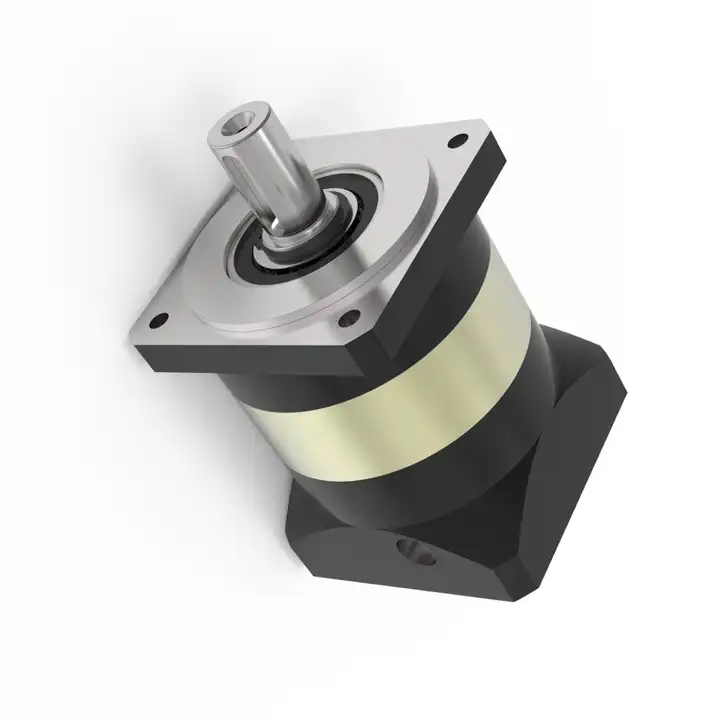
Golden Rule for Selection: Four Core Parameters
1. Torque matching rule
According to the ISO 6336 standard, the continuous working torque shall not exceed 80% of the rated value, and the instantaneous peak torque shall be less than 150% of the allowable value.
Calculation example: When the load torque is 3000Nm, a model with an allowable torque of ≥3750Nm (3000/0.8) should be selected.
Motor compatibility: High-power motors (such as ≥7.5kW) must be matched with reinforced output shafts to avoid the risk of shaft breakage.
2. Speed ratio accuracy control
It is recommended that the speed ratio error for industrial-grade applications be ≤1%
Precision transmission (such as CNC machine tools) requires ≤0.5%
A case of a certain semiconductor equipment: After the speed ratio error was optimized from 1.2% to 0.3%, the product yield increased by 18%
3. Spatial adaptation plan
The installation flange should be compatible with DIN 5480 or SAE J500 standards
A 20% safety margin should be reserved for radial loads
Compact design: The 700kg lightweight body supports speed adjustment from 1450 to 1500rpm
4. Optimization of the inertia ratio
The ideal inertia ratio should be controlled within five times. A certain logistics sorting system reduced the inertia ratio from 8:1 to 3:1 by adjusting the gear ratio, and the system response speed was increased by 35%.
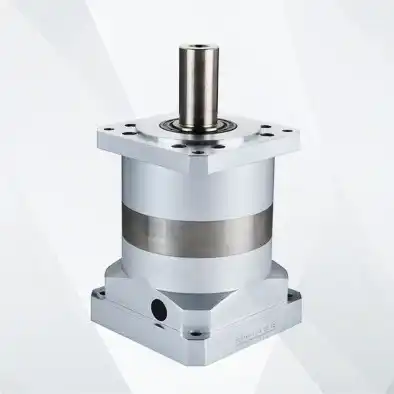
Five Details That Are Easily Overlooked
Selection of lubrication method
The maintenance cycle for grease lubrication is 2,000 hours
The oil lubrication needs to be replaced every 500 hours, but the heat dissipation performance is improved by 40%
Thermal balance management
When the ambient temperature is 40℃, the continuous working temperature rise shall not exceed 60K
A case of a certain die-casting machine: After adding heat dissipation fins, the service life of the gearbox was extended by three times
Reverse drive control
The speed ratio of the self-locking type should be ≥40:1
Vertical load applications must be equipped with braking devices
Vibration value monitoring
The no-load vibration velocity should be ≤2.8mm/s (GB/T 10095 standard).
Excessive vibration can shorten the service life of bearings by 70%
Advantages of modular design
The replaceable gear assembly design reduces maintenance costs by 55%
After a certain wind power pitch system adopted a modular solution, the spare parts inventory was reduced by 60%
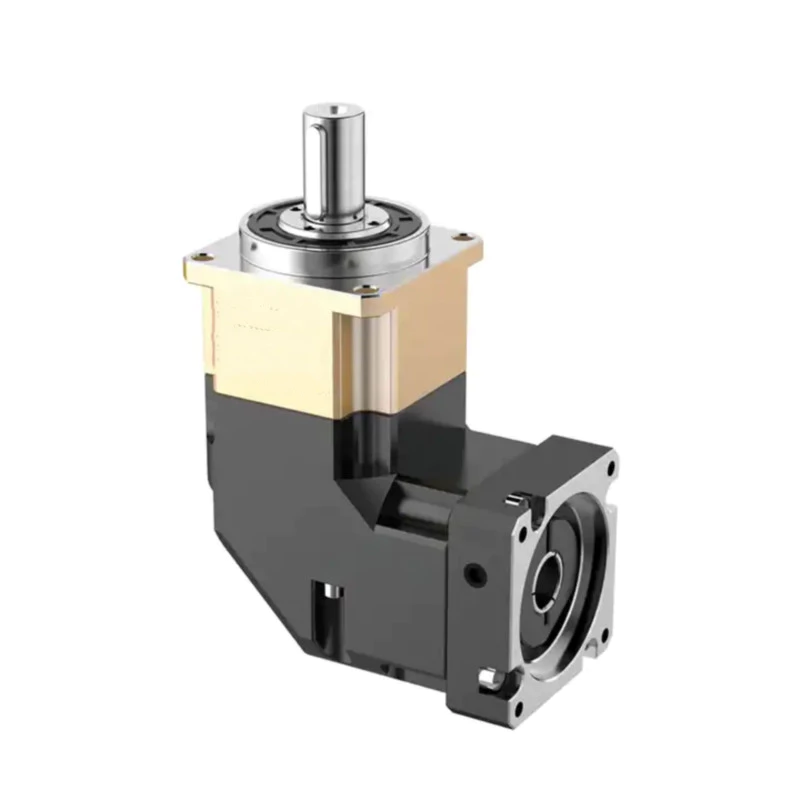
Examples of Customized Solutions
A certain robot enterprise requires a reducer with a 16-speed ratio and a torque of 5000Nm. Eventually, it adopted:
Three-stage transmission structure: module 3, speed ratio 1:16 (allowance)
Material selection: Carburized steel gears + special grease
Cost control: Bulk purchasing has reduced the cost per unit to below $600
Life guarantee: Expected life ≥5 years (maintenance once a year on average)
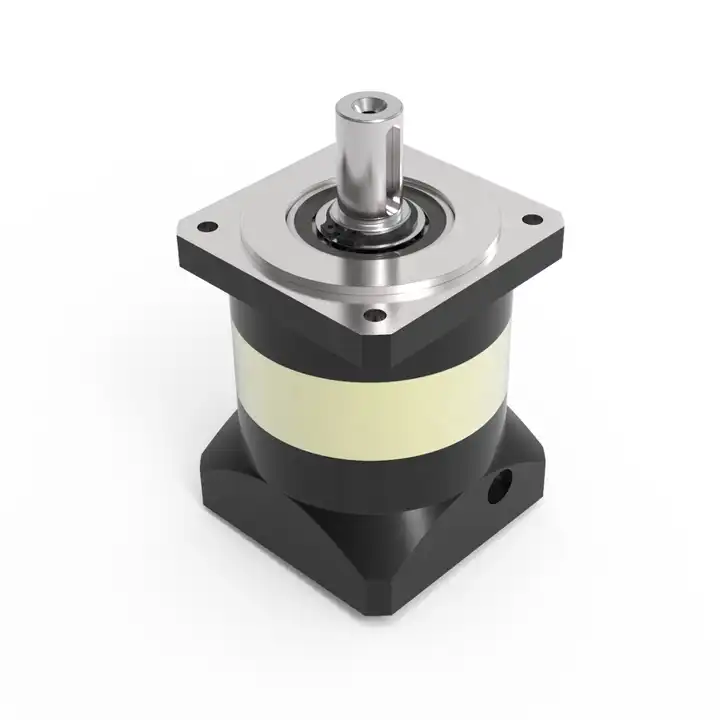
Conclusion: Model selection is not a multiple-choice question but a systems engineering project
When choosing a planetary gearbox, a four-dimensional evaluation model of “torque – speed ratio – space – inertia” should be established, and dynamic simulation should be carried out in combination with specific working conditions. It is recommended to adopt a combined strategy of “trial use of standard products + customized optimization”, and adjust the parameters based on three months of actual operation data. Remember: Excellent gearbox selection can enhance the performance of the servo system by more than 30%, while incorrect matching may lead to the failure of the entire transmission chain.