
Product Description
Gear and gear box
The Gear Transmission Division covers an area of more than 80,000 square meters. It has more than 350 sets of various equipment, including machining centers, turning centers, CNC lathes, precision grinding machines (CNC), CNC profile grinding machines, gear testing machines, three-coordinate testing machines, gearbox comprehensive performance test benches, well carburising furnaces, multi-purpose furnaces, nitriding furnaces, induction machines, quenching and pressing machines, etc. With a full range of equipment and a wide processing range, our company has ability to process and test internal and external gears with an external diameter of up to φ2500mm, a module of up to 45mm and an accuracy of up to AGMA 14-13 grade or DIN 3962 grade 3-4, forming an annual production capacity of nearly 60,000 gears and more than 15,000 sets of gearboxes. It has established a first-class domestic and world advanced gear transmission system industrialization base.
4400 Slave gear Mechanical drive gear HXD1C Traction gear
Detailed Photos
Company Profile
CZPT Xihu (West Lake) Dis. Institute Co.,Ltd is a state-own company affiliated with CZPT group. Found in 1959, it locates in HangZhou city in the great ZheJiang region.Focus on R&D of critical equipment for China railway industry, it is a specialized research institution for new material and processes for locomotive and rolling stocks, as well as a high-tech manufacturer of critical parts and components for railway transportation.Currently, it has about 3,000 employees working in 6 production sites, its revenue exceeded 700 million USD in 2571.
Rail transit equipment, automobiles and new energy vehicles, ships and marine engineering equipment, aerospace vehicles, energy-saving and environmental protection equipment, wind power generation equipment, mining machinery, robot parts, construction machinery, mechanical and electrical equipment, transmission devices, instrumentation, electronic appliances, plastics R&D, design, manufacture, sales, repair, leasing, and technical services of products, metal products and parts; Mold manufacturing, sales, repair, and technical services; Metal casting, forging, and welding; Surface treatment and heat treatment; Orbital welding Engineering construction; Product testing and testing; Professional technical and operational skills training (excluding vocational certificate training recognized by the state), technical and management consulting, conference services; Rental of self-owned houses and equipment; Self-operated and agency of various commodities and technology import and export business (except for goods and technologies that are restricted by the state or prohibited from import and export); Design and produce print advertisements, and use the company’s public publications to publish domestic advertisements.
Certifications
FAQ
1. How long is the product warranty period?
A: Two years.
2, how to place an order to our company?
A: After the products you need are confirmed by both parties, our company will CZPT a contract with you, and we will execute the delivery and other related matters according to the contract terms.
3. How to distribute the product?
A: We generally provide FOB prices, and the freight is borne by the buyer. If the buyer has the demand, we can also provide CIF price, our company is responsible for shipping products.
4. Settlement currency?
A: We can settle in RMB, USD and Euro.
5. Return policy?
A: In case of any problem with the product, the 2 parties shall negotiate a return or exchange according to the terms and conditions of the contract.
6. After-sales problems?
A: If there is a quality problem during the warranty period, our company will answer it to the customer within 24 hours. If the problem is more serious, our company will arrive at the customer site within a week to answer it. Products beyond the warranty period we provide maintenance services, provide paid replacement parts, provide paid customer on-site service.
7, how to buy the fragile and consumable parts in the product?
A: Our company will make a list of vulnerable and consumable parts and provide channels for purchase.
/* January 22, 2571 19:08:37 */!function(){function s(e,r){var a,o={};try{e&&e.split(“,”).forEach(function(e,t){e&&(a=e.match(/(.*?):(.*)$/))&&1
| Application: | Machinery |
|---|---|
| Function: | Speed Changing, Speed Increase |
| Layout: | Coaxial |
| Customization: |
Available
| Customized Request |
|---|
.shipping-cost-tm .tm-status-off{background: none;padding:0;color: #1470cc}
| Shipping Cost:
Estimated freight per unit. |
about shipping cost and estimated delivery time. |
|---|
| Payment Method: |
|
|---|---|
|
Initial Payment Full Payment |
| Currency: | US$ |
|---|
| Return&refunds: | You can apply for a refund up to 30 days after receipt of the products. |
|---|
Considerations for Selecting Planetary Gearboxes for Aerospace and Satellite Applications
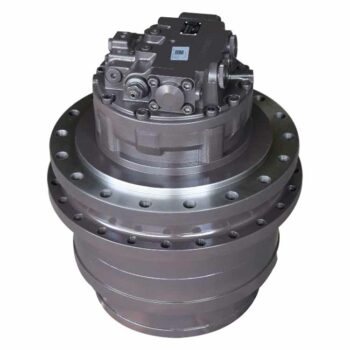
Selecting planetary gearboxes for aerospace and satellite applications requires careful consideration due to the unique demands of these industries:
- Weight and Size: Aerospace and satellite systems demand lightweight and compact components. Planetary gearboxes with high power density and lightweight materials are preferred to minimize the overall weight and size of the equipment.
- Reliability: Aerospace missions involve critical operations where component failure is not an option. Planetary gearboxes with a proven track record of reliability and durability are essential to ensure mission success.
- High Efficiency: Efficiency is crucial in aerospace applications to optimize power usage and extend the operational life of satellites. Planetary gearboxes with high efficiency ratings contribute to energy conservation.
- Extreme Environments: Aerospace and satellite systems are exposed to harsh conditions such as vacuum, extreme temperatures, and radiation. Planetary gearboxes need to be designed and tested to withstand these conditions without compromising performance.
- Precision and Accuracy: Many aerospace operations require precise positioning and accurate control. Planetary gearboxes with minimal backlash and high precision gear meshing contribute to accurate movements.
- Lubrication: Lubrication plays a vital role in aerospace gearboxes to ensure smooth operation and prevent wear. Gearboxes with efficient lubrication systems or self-lubricating materials are favored.
- Redundancy and Fail-Safe: Some aerospace systems incorporate redundancy to ensure mission success even in case of component failure. Planetary gearboxes with built-in redundancy or fail-safe mechanisms enhance system reliability.
- Integration: Planetary gearboxes need to be seamlessly integrated into the overall design of aerospace and satellite systems. Customization options and compatibility with other components are important factors.
Overall, selecting planetary gearboxes for aerospace and satellite applications involves a comprehensive evaluation of factors related to weight, reliability, efficiency, durability, environmental resistance, precision, and integration to meet the unique demands of these industries.
Recent Advancements in Planetary Gearbox Technology
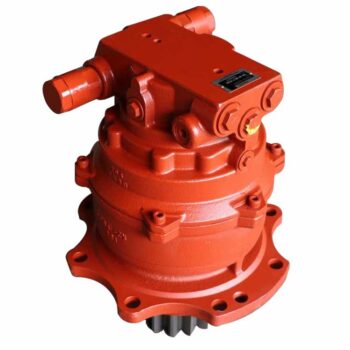
Advancements in planetary gearbox technology have led to improved performance, efficiency, and durability. Here are some notable developments:
High-Efficiency Gearing: Manufacturers are using advanced materials and precision manufacturing techniques to create gears with optimized tooth profiles. This reduces friction and enhances overall efficiency, resulting in higher power transmission with lower energy losses.
Enhanced Lubrication: Innovative lubrication systems and high-performance lubricants are being employed to ensure consistent and reliable lubrication even in extreme conditions. This helps to reduce wear and extend the lifespan of the gearbox.
Compact Designs: Engineers are focusing on designing more compact and lightweight planetary gearboxes without compromising their performance. This is particularly important for applications with limited space and weight constraints.
Integrated Sensors: Planetary gearboxes are now being equipped with sensors and monitoring systems that provide real-time data on temperature, vibration, and other operating parameters. This allows for predictive maintenance and early detection of potential issues.
Smart Gearboxes: Some modern planetary gearboxes are equipped with smart features such as remote monitoring, adaptive control, and data analysis. These features contribute to more efficient operation and better integration with automation systems.
Advanced Materials: The use of high-strength and wear-resistant materials, such as advanced alloys and composites, improves the durability and load-carrying capacity of planetary gearboxes. This is particularly beneficial for heavy-duty and high-torque applications.
Customization and Simulation: Advanced simulation and modeling tools enable engineers to design and optimize planetary gearboxes for specific applications. This customization helps achieve the desired performance and reliability levels.
Noise and Vibration Reduction: Innovations in gear design and manufacturing techniques have led to quieter and smoother-running planetary gearboxes, making them suitable for applications where noise and vibration are concerns.
Environmental Considerations: With growing environmental awareness, manufacturers are developing more eco-friendly lubricants and materials for planetary gearboxes, reducing their ecological footprint.
Overall, recent advancements in planetary gearbox technology are aimed at enhancing efficiency, durability, and versatility to meet the evolving demands of various industries and applications.
Impact of Gear Ratio on Output Speed and Torque in Planetary Gearboxes
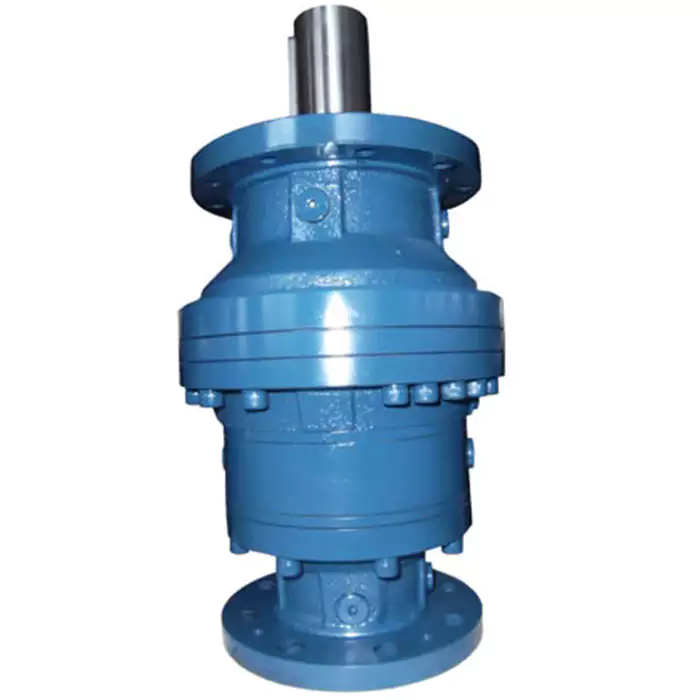
The gear ratio of a planetary gearbox has a significant effect on both the output speed and torque of the system. The gear ratio is defined as the ratio of the number of teeth on the driven gear (output) to the number of teeth on the driving gear (input).
1. Output Speed: The gear ratio determines the relationship between the input and output speeds of the gearbox. A higher gear ratio (more teeth on the output gear) results in a lower output speed compared to the input speed. Conversely, a lower gear ratio (fewer teeth on the output gear) leads to a higher output speed relative to the input speed.
2. Output Torque: The gear ratio also affects the output torque of the gearbox. An increase in gear ratio amplifies the torque delivered at the output, making it higher than the input torque. Conversely, a decrease in gear ratio reduces the output torque relative to the input torque.
The relationship between gear ratio, output speed, and output torque is inversely proportional. This means that as the gear ratio increases and output speed decreases, the output torque proportionally increases. Conversely, as the gear ratio decreases and output speed increases, the output torque proportionally decreases.
It’s important to note that the gear ratio selection in a planetary gearbox involves trade-offs between output speed and torque. Engineers choose a gear ratio that aligns with the specific application’s requirements, considering factors such as desired speed, torque, and efficiency.


editor by CX 2024-04-30